Somaliland: The Complete Country Guide
Sources: Republic of Somaliland Country Profile 2021 (MFA) and Central Statistics Department publications. Last verified: . Full sources & methodology
What is Somaliland
Independent from Britain 26 June 1960, recognised then by 35 states [R08]; union with Somalia 1 July 1960 [R09]; sovereignty restored 18 May 1991 [R10].
Own constitution (2001, 97.1%) [R11], currency [R38], elections with peaceful transfers of power [R12].
On 26 December 2025 Israel became the first UN member state to formally recognise it [R14]; Somalia and the AU dispute the move — state both facts plainly.
One forward-looking line on Berbera and the economy [R41].
Three landscapes define it: the hot coastal Guban plain, the Golis mountain escarpment — rising to 2,633m at Surad — and the Hawd plateau stretching south towards Ethiopia. Tap a region on the map to explore.
Regional capital:
Five thousand years in fourteen moments
A livestock economy building a trade future
The Central Statistics Department’s national accounts put GDP at approximately US$3 billion, from US$2.57 billion in 2017 — steady growth interrupted by the 2015 drought and the 2017 livestock export ban, and renewed by Berbera’s transformation into a regional trade gateway.
The other pillar is the diaspora: an estimated US$1 billion in remittances reaches the Somali regions each year (World Bank estimate), a substantial share of it flowing into Somaliland’s homes, businesses and construction sites.
The Somaliland shilling is regulated by the Bank of Somaliland, but daily commerce runs as much on US dollars and mobile money — Zaad and eDahab — as on cash, making this one of the most mobile-money-intensive economies anywhere.
GDP, current prices (US$ bn)
Livestock export destinations, 2010 (%)
A democracy built from the ground up
H.E. Abdirahman Mohamed Abdullahi, known as Irro, is the sixth president. He won the 13 November 2024 election with 63.9% of the vote and was inaugurated that December — the third time power has passed peacefully between parties at the ballot box. H.E. Mohamed Aw-Ali Abdi serves as Vice-President. [R05] [R06]
The constitution permits three national political parties; today these are Waddani, which governs, with Kulmiye and KAAH. [R07]
Not all of the territory Somaliland claims is under its administration. Since 2023, parts of Sool region, including Las Anod, have been administered by the SSC-Khaatumo authority following armed conflict. Somaliland maintains its claim to the 1960 protectorate borders; the situation remains unresolved.
Purpose: 300–400 words answering ‘Somaliland vs Somalia’ and ‘Somaliland recognition’ — the highest-sensitivity, highest-volume topic on the page. Abdi’s voice leads.
Structure: (1) the 1960 legal argument — never-ratified Act of Union, 1961 referendum rejection [R09, S1 Ch.6]; (2) the state-in-practice argument — constitution, elections, currency, security [R11, R12]; (3) 26 December 2025 and what changed [R14, R15]; (4) the counter-position stated fairly — Somalia, AU, Arab League rejection [S8]; (5) what happens next, without prediction.
Young, mobile and connected
It is a young and urbanising society: over half the population lives in urban and semi-urban areas, growth runs at around 2.9% a year, and women have on average 5.5 children.
Somali is the official language and Arabic the second; English is widely used in business, education and government. Islam is the official religion.
Life expectancy stands at 54 for men and 57 for women, and adult literacy at roughly 48% (2012 survey) — with youth literacy substantially higher, a generational shift visible in every classroom and start-up in Hargeisa.
- Urbanisation 53%
- Literacy 48%
- Urbanisation 53%
- Literacy 48%
The Berbera decade
Berbera’s other asset is its airport: a 4,140-metre runway — among the longest in Africa, once listed as an emergency landing strip for the NASA space shuttle — upgraded with UAE investment.
Connectivity is a quiet strength. Telesom and Somtel run competitive mobile networks with mobile money woven into daily life, and Somcable’s fibre links the country to international capacity. Electricity is supplied by private independent power producers; costs are high by regional standards, though consolidation and solar investment are steadily improving supply.
Offshore and onshore, 24 oil and gas blocks have drawn exploration interest for a century — the first oil seep was reported in 1912 — though commercial production remains ahead.
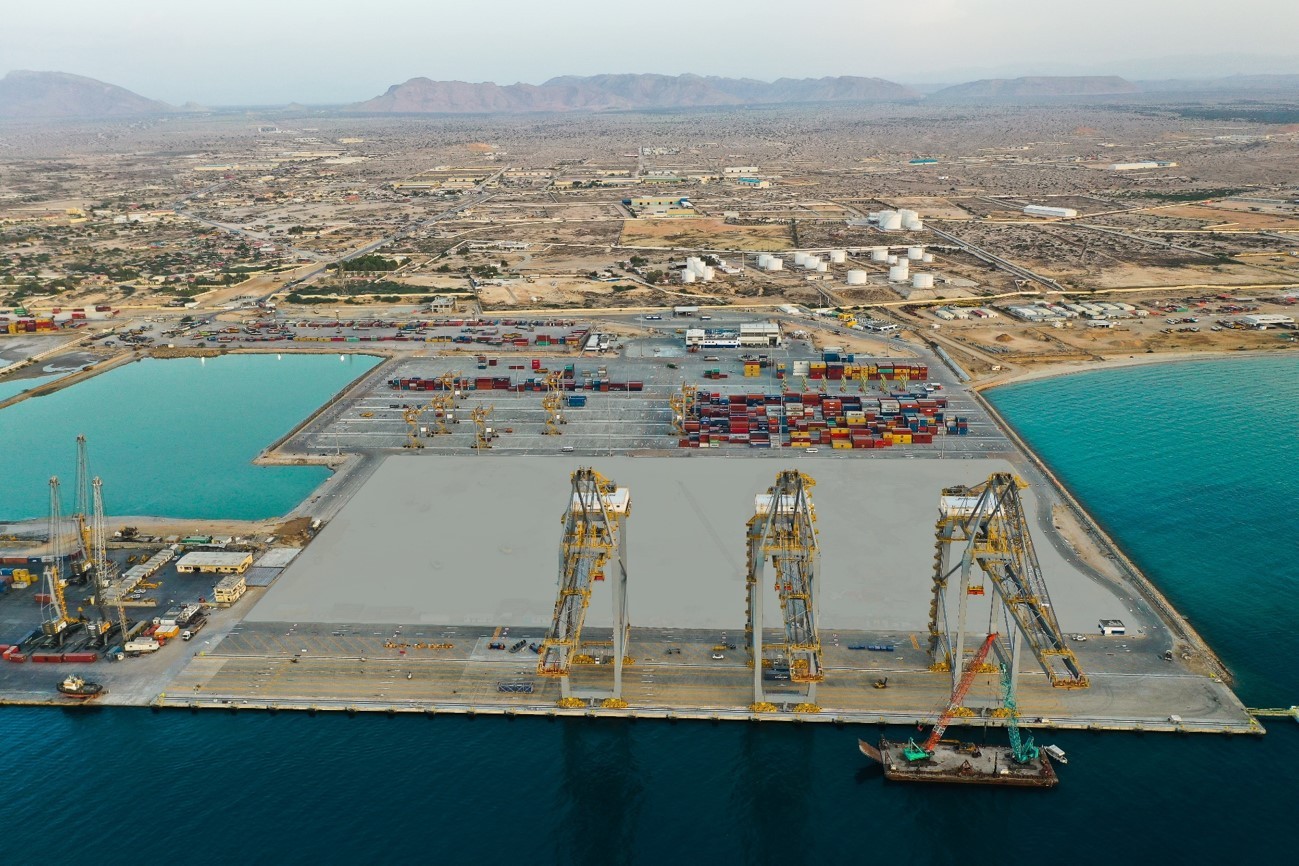
Port of Berbera
Your content goes here. Edit or remove this text inline or in the module Content settings. You can also style every aspect of this content in the module Design settings and even apply custom CSS to this text in the module Advanced settings.

Berbera Airport
Your content goes here. Edit or remove this text inline or in the module Content settings. You can also style every aspect of this content in the module Design settings and even apply custom CSS to this text in the module Advanced settings.

Telecoms & mobile money
Your content goes here. Edit or remove this text inline or in the module Content settings. You can also style every aspect of this content in the module Design settings and even apply custom CSS to this text in the module Advanced settings.
Where the opportunities are
The investment case rests on stability and position: three decades of peace, functioning institutions, a strategic coastline near the Bab al-Mandeb through which roughly a third of the world’s shipping passes, and — since December 2025 — the beginnings of formal international recognition.
Foreign direct investment is no longer theoretical. DP World’s Berbera concession is the anchor example; Coca-Cola’s bottling plant the consumer-facing one. Post-recognition, Israeli technology and infrastructure partnerships are the newest entrants.
Livestock & agri-trade
Logistics & trade
Real estate & construction
Financial services
Energy
Fisheries
The Horn of Africa’s best-kept itinerary
Then the coast — Berbera’s Ottoman-era old town and unspoilt beaches — and the mountains, where the Daallo escarpment drops two kilometres from juniper forest to desert floor. Zeila, in the far west, is often called the entry point of Islam into Africa.
Visas are available on arrival at Egal International Airport for many nationalities; travellers should confirm current requirements with their airline or the nearest Somaliland representative office before flying.
The climate splits into four seasons — two rainy (Gu’ in spring, Dayr in autumn), two dry — with the coast hot year-round and the highlands markedly cooler.