
DP World Berbera Deal
In May 2016 the Government of Somaliland signed a 30-year agreement with DP World to develop and manage Berbera Port at a cost of $442 million.
This was by far the biggest Foreign Direct Investment (FDI) deal ever signed and has the potential to completely transform the Somaliland economy if everything goes to plan.
With such big news the team at SomalilandBiz.com have put together the most concise report available along with all the latest news as it transpires.
- $442 million investment by DP World
- 30-year lease to DP World
- 51% DP World stake, 30% Somaliland stake, 19% Ethiopia stake
- $110 million investment in Berbera Corridor by Federal Government of Ethiopia
- 12 square kilometer greenfield Free Economic Zone
- If Somaliland can capture 50% of Ethiopia’s trade traffic, then it can handle USD $1.4 billion in trade for Ethiopia annually
Since the deal was signed, significant operational advances have already been achieved: in September 2017, Berbera Port recorded the highest container volumes in its history with a 40% increase compared to September 2016.

Latest News on the DP World Berbera Deal
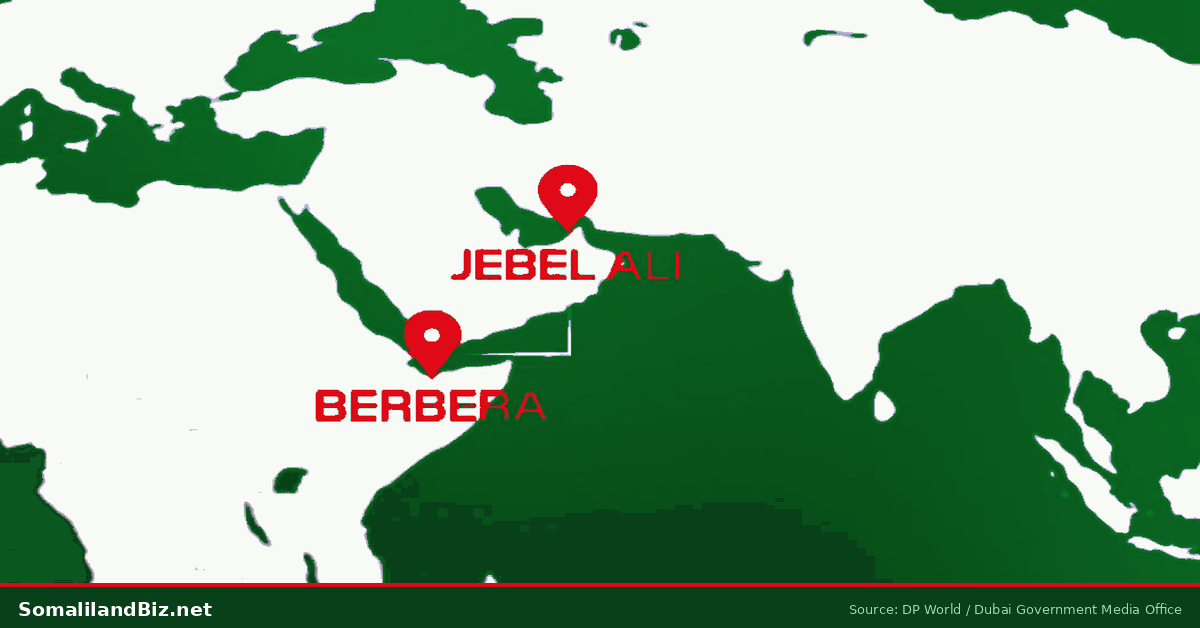
DP World Launches Direct Jebel Ali–Berbera Shipping Route

DP World Berbera Infographic

Another milestone reached in development of Berbera Port

First 12km of Berbera Corridor
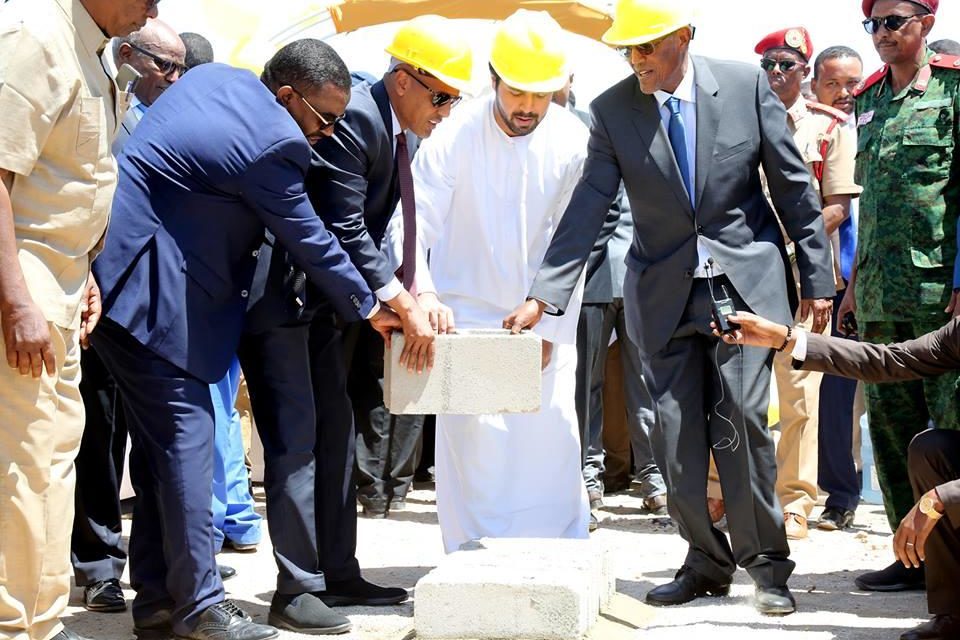
Berbera Corridor Ceremony

Berbera Port Dirhams and Dollars Podcast
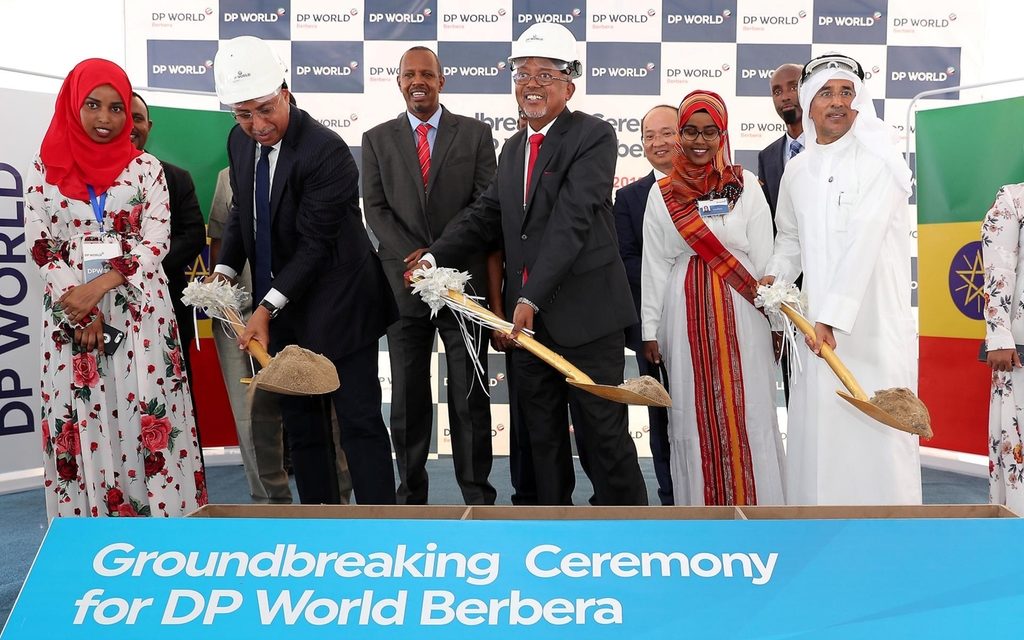
DP World and Somaliland Ground-Breaking Ceremony – October 2018

Opportunities and Risks for Somaliland
1. History of Berbera Port
1.1 General background and the history of Berbera Port
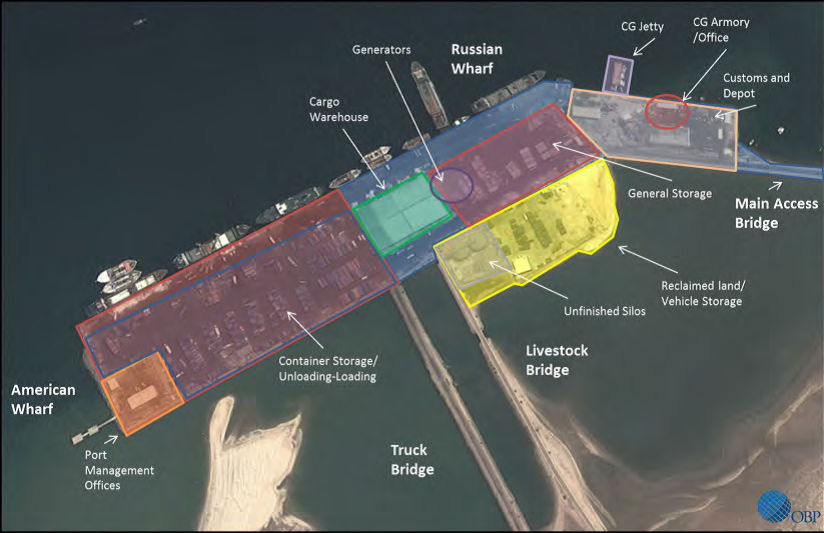
During its time as the British Protectorate of Somaliland, Berbera was briefly the capital from 1884 until 1941, being later replaced by Hargeisa. This is a testament to the British seeing Berbera as an important commercial centre, especially in regards to its port. It was opened for the first time in 1968 by the then Somali Democratic Republic. Berbera Port historically served as a naval base for the Socialist government of Somalia. In 1972, under an agreement between the late dictator Siad Barre and the USSR, Berbera’s Port was leased to the Soviet Union who used it as a base of operations in the region. In the 1980s, the Somali Democratic Republic switched its allegiances to the US and expelled USSR military advisors and officials. Following on from this the lease to manage Berbera Port was given to the US military. It was under the US that Berbera Port was expanded in line with Berbera Airport whose runway was enlarged to act as a standby landing runway for the US space programme. It is due to this that Berbera Airport possesses one of Africa’s largest runways.
When Somaliland reinstated its sovereignty on 18th May 1991, Berbera Port came under the control of the government of the Republic of Somaliland. It is no coincidence that Somaliland’s first inter-clan peace conference took place in Berbera in February 1991, signifying Berbera as Somaliland’s most important economic center. Such was the importance of Berbera Port that the government’s inability to exert control over it led to President Abdirahman Tuur losing power in 1992. Berbera based militias challenged the Tuur government’s authority and deprived it of the means to raise revenue and create an army (Bradbury 2008:89).
However, it was under the late President Mohamed Ibrahim Egal that Berbera took center stage as Somaliland’s most important national asset. President Egal was able to utilize the resources of Berbera Port to demobilize militias, integrate them into the Somaliland National Army and pay salaries on time. As such Berbera Port played a crucial role in Somaliland’s state-making. As of 2013, the Port of Berbera has a 650-metre berth and a depth of 11.5–12 meters. It is strategically located along the global oil route. Berbera port is the economic engine of the country providing all necessary import and export services (Berbera Port Authority 2016). With imports of $883 million and exports of $387 million, the country experienced a trade deficit of about $496 million (37.5 percent of the GDP) in 2012.

2. Strategic importance of Berbera Port
Berbera plays a commercial role, by providing portal services to wide range of Somali and non-Somali communities in the region. In addition, it remains strategic when it comes to commercial and oil shipping lanes. Such strategic location allows the great powers to monitor the sea traffic of the Gulf of Aden, Red Sea, and the Horn of Africa; hence Berbera port’s location attracts the interest of major multinational port operators in the past few years such as Bolloré Logistics and more recently, UAE-based DP World.

3. Background to Berbera Port DP World deal
3.1 Ethiopia factor
Except for flowers and some perishable agro-processed foods such as meat, which are exported via Ethiopian airlines, Ethiopia uses Djibouti port for over 95% of its import and exports. The Federal Government of Ethiopia have realized that this is no longer sustainable and they have gone out of their way to address reduce their dependency on Djibouti by seeking alternative export routes. Currently, Ethiopia utilizes the two major ports in Djibouti, Djibouti Port and Doraleh Port (which incidentally is managed by DP World).

Development and improvements have been gradual but Dubai Ports World (DP World) developed in Djibouti world-class port facilities in the late 2000s, which, for a time, were capable of keeping up with the demands of Ethiopia’s booming economy (Chorin, 2010; The Economist, 2008). Opened in 2009, Doraleh container terminal and port became the sole facility in the region capable of handling 15,000-tonne-plus container vessels (Styan, 2013; page 6). For its part, Ethiopia attempted to escape the high costs of freight services and long transportation time for importing and exporting goods suffered by landlocked countries by developing the Djibouti Corridor Authority (DCA) (Gallup, Sachs, & Mellinger, 1999; Stone, 2001). Infrastructure development across national borders is more difficult to arrange than similar investments within a country. The DCA – a joint one-stop border post development project – has proved only moderately successful, at least from an economic perspective, given slow implementation and development as well as recurrent disputes with Djibouti over transit and taxation (Cannon, 2015). Instead in 2018 Ethiopia broke ground on the 750km Addis Ababa–Djibouti Railway which cost $4 billion and was funded by Chinese state-owned rail and construction firms as part of China’s transformative One Belt One Road Initiative. The Addis Ababa-Djibouti Railway connects the landlocked Ethiopia to Djibouti’s port which is significant as Djibouti handles 95% of Ethiopia’s cargo.
Ethiopia’s Federal government has looked at various alternatives to Djibouti in its quest to diversify its export routes. Ethiopia’s government is concerned by the strategic national security implications of being overly reliant on a single access point for trade and vital supplies. As such, Ethiopia has focused on securing access to ports in neighboring countries, particularly the port of Berbera, Somaliland. Unbeknownst to many, Ethiopia’s government lobbied the UAE for years to invest in Berbera Port as it was financially constrained itself.

3.2 Ethiopia’s history with Berbera Port
Initially, Ethiopia attempted to overcome these challenges by encouraging trilateral agreements with China and Somaliland in 2011 covering gas, oil and logistics. The agreements also included the large-scale development of the port of Berbera by the Chinese company PetroTrans. At the same time, ESL placed an order for nine new vessels in China and voiced its hope to become one of the main shareholders in the port, perhaps in conjunction with an international terminal operator (Port Strategy, 2011). However, the agreements never materialized, partly because PetroTrans was unable to procure insurance for the port and proposed LNG facilities (Anderson, 2012). Berbera port remained undeveloped, in part, because Ethiopia was unable to find investors or companies with the incentive to take the substantial political and legal risks associated with business in Somaliland (Ahmed, 2000; Houssein, 2005; Yusuf, 2015).
In 2014, Somaliland and Ethiopia signed a Memorandum of Understanding (MOU) to cover trade also with the stipulation of Ethiopia allocating 30% of its exports to Berbera Port in Somaliland. In addition, in February 2015 the government of Somaliland signed a deal with the Federal government of Ethiopia to develop the port (Davison, 2016). According to Ethiopia’s Transport Minister; “Ethiopia wanted 30 percent of its trade to go via Berbera by July of 2015, according to a five-year growth plan published in 2010,”. Linking the desire to develop Berbera with alleviating Ethiopian dependency, he went on to say: “As much as 97 percent of shipments are still going through Djibouti because of problems with the capacity and the condition of Berbera’s port, the poor state of roads to Ethiopia and the lack of international recognition for Somaliland’s statehood claims” (Davison, 2016).
3.3 Long-term commercial benefit for the UAE/DP World

4. Berbera Port DP World deal
4.1 Fundamentals of the Berbera – DP World deal
$442 million investment by DP World
30-year lease to DP World
51% DP World stake, 30% Somaliland stake, 19% Ethiopia stake
$110 million investment in Berbera Corridor by Federal Government of Ethiopia
12 square kilometer greenfield Free Economic Zone around Berbera Port
400-metre quay and 250,000 meters square yard extension of Berbera Port

It is under this backdrop that UAE-based DP World entered the fray in 2016. One of the world’s largest port operators, DP World runs 77 marine and inland terminals across six continents, including Dubai’s Jebel Ali port, the largest in the Middle East. As part of the $442 million deal, DP World won a 30-year concession. DP World’s investment would be developed in two phases with the overall aim of turning Berbera Port into a maritime hub for East Africa and a key outlet for Ethiopia. The DP World investment in Berbera includes the construction of a 400-metre quay and 250,000 meters square yard extension of Berbera Port. DP World’s Chairman also announced the creation of a free zone offering tax advantages and investment incentives. Sultan Ahmed Bin Sulayem, DP World’s chairman and CEO, portrayed Berbera Port as a future magnet for shipping to eastern Africa that would spur regional economic growth. “Investment in this natural deep-water port will attract more shipping lines to East Africa and its modernization will act as a catalyst for the growth of the country and the region’s economy,” he said upon the deal’s signing (Stevis &
Fitch, 2016).
Since winning the concession to manage Berbera Port in 2016, DP World has made advances in terms of Berbera Port’s operational capacity. In September 2017, Berbera Port recorded the highest container volumes in its history with a 40% increase compared to September 2016. Meanwhile, DP World has begun implementing the Berbera master plan, which includes an additional 400-metre container terminal. It has also upgraded existing facilities by introducing new equipment, including two reach stackers, 10 internal transfer vehicles (ITVs) and five forklifts. The first DP World cranes also arrived in early 2018.
According to sources involved in the DP World Berbera Port tripartite deal, external companies played a central role in the due diligence process. One such company is Ernst & Young, the multinational professional services firm which is considered one of the world’s “Big Four” auditing and accounting companies. The legal due diligence aspect of the report was conducted by British law firm Simmons & Simmons. As part of the Berbera Port deal, Berbera Port will witness investments totaling US$442 million for the management and development of a “world-class, multi-purpose deep seaport project” (Staff Report, 2016). The UAE has also reportedly agreed to build a modern highway between Berbera Port and the Somaliland/Ethiopia border town of Wajaale. This will link with the modern highway on the Ethiopian side of the border (National Staff, 2017a). Additionally, when the deal was inked between DP World and Somaliland, Ethiopia ensured its substantive presence in the running and development of the port in the form of Ethiopian Shipping Lines (ESL). Ethiopia’s state-owned ESL announced in 2017 that it would control a 19% share in the Berbera deal – almost twice as much as it expected to receive (Indian Ocean Newsletter, 2017). Such is Ethiopia’s importance that DP World allocated close to one-fifth of the port’s capacity for Ethiopia’s exports.
On 1st March 2018, DP World finally confirmed that Ethiopia has acquired a 19% stake in the DP World administered Berbera Port. However, as part of this deal, it was announced that the Federal government of Ethiopia would invest in infrastructure to develop the transit road known as the Berbera Corridor, a trade gateway for the landlocked country. The Berbera Port deal thus became a tripartite agreement between DP World, the government of Somaliland and the Federal Government of Ethiopia signed in Dubai, UAE. The deal was signed by Ethiopia’s Transport Minister, Somaliland’s Foreign Minister and the DP World Chairman and CEO.

4.2 Berbera Corridor
This is despite Ethiopia being fully reliant on Djibouti’s ports for its maritime trade and exports. A fully functioning transit road between Berbera and Ethiopia could have substantial multiplier effects for Somaliland and increase revenues for Berbera Port ten-fold. Analysts believe that this is the reason DP World allocated a portion of its shares to Ethiopia. DP World understands that in landlocked Ethiopia it has secured a market of over 110 million people for Berbera Port. Ethiopia’s large and very young population coupled with the development of the Berbera Corridor means that Berbera Port can serve as a gateway to regional trade in East Africa for generations to come.


5. Free Economic Zone in Berbera
5.1 Background to Free trade zones
Free zones are developed to support economic reform; to act as “pressure valves” to alleviate growing unemployment; to serve as experimental labs for the application of new policies and approaches; and to attract Foreign Direct Investment (FDI). Although there are various types of Free Zones, the version most applicable to Berbera Free Zone are the Free trade zones that are typically located near seaports or airports. These types of free trade zones mainly offer exemptions from national import and export duties on goods that are re-exported. Crucially for Somaliland, Free Zones have the potential to alleviate severe bottlenecks in the economy such as high levels of unemployment.
Case Study: Egypt’s Free Zones
As of June 2008, free zones in Egypt employed nearly 136,000 people. In 2007/2008 they accounted for 20.3% of Egypt’s total exports, and FDI in free zones represented 9.5% of Egypt’s total FDI in 2007/2008.
5.2 Berbera Free Zone
According to Dr Saad Shire “Developing a free zone will complement the growth of Berbera Port, enabling it to become a gateway for trade to the region and the whole of Africa. It will also generate jobs for the local population and encourage small and medium-sized companies in the area to locate their operations in an environment conducive to trade. Our partnership with DP World is a model that we are keen to develop and for the benefit of all.”
Under the terms of the agreement, DP World will develop Berbera Free Zone in phases, with the first phase focusing on 4 square kilometers of land out of the 12.2 square kilometers earmarked for the project. Each phase of the Berbera Free Zone will start once the previous phase has achieved 85% occupancy. It will target a wide range of businesses including warehousing, logistics, traders, manufacturers and other related businesses.

5.3 Recommendations for Berbera Free Zone
For Somaliland, the absence of an active investment law is a clear disadvantage when compared with regional countries such as Rwanda and Kenya that are competing for the same industries and quality FDI. As such for Somaliland truly benefit from the Berbera Free Zone, it will need a new generation of investment laws aimed at attracting quality FDI. Somaliland’s government should also consider a strategy of opening certain sectors horizontally across Somaliland’s regions. This will enable regions that specialize in livestock rearing (Toghdeer and Sanaag) to better integrate their economies with the export and investment opportunities available in the Berbera Free Zone. This will then allow Somaliland’s government to extract high value from its Berbera Free Zone with a focus on sustainable industries aimed at building an export base. This will then allow Somaliland’s economy to improve its competitiveness in sectors it has an advantage in such as livestock and agricultural production.

6. Economic opportunities in the Berbera Port deal
6.1 Theoretical framework analyzing Port benefits
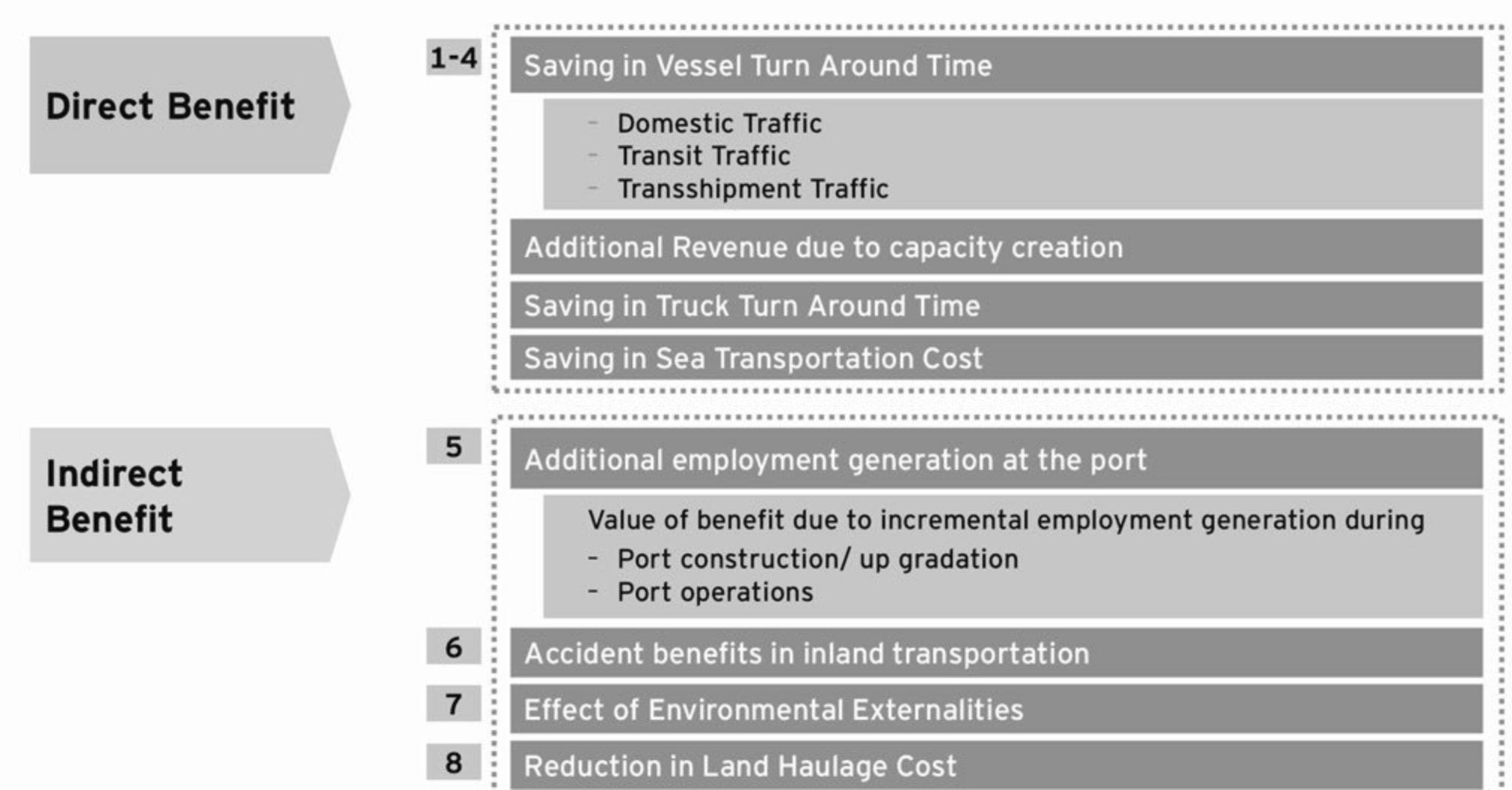


6.2 Export Potential of Somaliland
Ethiopia’s total exports in 2017 amounted to USD $2.9 billion, up by 10.5% since 20131
Djibouti currently manages 95% of Ethiopia’s trade traffic which is worth USD $2.8 billion per year
If Somaliland can capture 50% of Ethiopia’s trade traffic, then it can handle USD $1.4 billion in trade for Ethiopia annually
According to the Berbera Port Authority (BPA), in 2012 Somaliland’s imports amounted to $883 million and its exports in 2012 were $387 million. As such the trade deficit in 2012 was around $496 million and overall GDP of Somaliland was approximately USD $1.3 billion.

- As we can see from figure 16 above, we can forecast a 40% to 50% growth rate for exports between 2018 and 2025. This figure accounts for the 50% of trade that Somaliland plans to capture from key stakeholder, Ethiopia.1
- The Berbera – DP World deal will allow Somaliland for the first time in its history to run a trade surplus. As such if DP World and Somaliland implement the Berbera Port deal as planned – they can expect to have a trade surplus of around USD $6.8 billion by 2025.
- According to the forecast, this means that in less than a decade Somaliland can grow its GDP ten-fold from around USD $1.5 billion to USD $12.0 billion.
- For Somaliland the tradeoff of its major commercial port makes sense and will ensure the exponential growth of its economy. With this exceptional growth in trade surplus and GDP, Somaliland’s government can focus entirely on the important task of rebalancing the economy and investing in critical sectors such as healthcare and education.

6.3 Multiplier Effect of Berbera Port deal for Somaliland’s economy

In our analysis below, we can see that 15% of port concessions include renewal options for those parties with a stake in the deal. 5-6% of concessions are subsequently often extended.


7. Privatization for Berbera Port
7.1 Berbera Port Authority – DP World privatisation

7.2 Advantages of Privatization
Somaliland’s privatization of Berbera Port is ahead of the curve as the majority of countries in the world still manage their port authorities under public administration. The downside to public ownership is that managerial and investment decisions are less likely to be aligned with market needs. Under the best-practice corporatized model, port authorities remain government owned but operate under commercial terms and aimed at value creation for port customers and stakeholders.
In contrast, the following advantages can be found when privatizing Port Authorities. The transition of port authorities from public sector entities to state-owned port enterprises has proven to reduce risks of politically motivated investments, promote maximum utilization of existing port assets (both land and basins), and facilitate the development of new port infrastructure (berths, quays, and landside access) based on a commercially sound framework.
- Demand-driven infrastructure investments. Corporatized ports operate as effective and viable businesses. As such, they can efficiently assess and implement sustainable infrastructure upgrades and expansion projects. In addition, the corporation’s improved levels of financial credibility increase the port’s attractiveness to private investors. Demand-driven investment used in corporatized ports contrasts with the frequently supply-driven impetus behind government-funded port expansion projects, which consequently can remain underutilized for long periods.
- Revenue maximization from available assets. Given adequate skills, a corporatized port authority can effectively and innovatively exploit the port’s land and maritime assets to create value for its clients and for port users while capturing that value through efficient pricing. Ports under public administration rarely achieve this balance.
- Market-driven pricing. Corporatized port authorities can adjust pricing to market conditions, such as by using price discounts to attract new customers. Although pricing is subject to competition regulation based on the (inter)national corporate legal and regulatory framework, scope remains for application of commercial pricing principles by corporatized port authorities.
- Rationalisation and improved control of operating costs. In contrast to practices under traditional public-sector port authorities, which may face only “soft budget constraints” and hence lack real incentives to reduce operating costs, corporatized entities feel pressure from their independent and professional supervisory boards to tightly control operating costs.

7.3 Case Study: Port of Rotterdam, Netherlands

If there are any mistakes/errors on our part please contact us to let us know and we’ll rectify where necessary.