More than 200 Israeli investors gathered in Tel Aviv for the first Somaliland–Israel Business Forum. We look at the sectors, the opportunities, and what comes next.
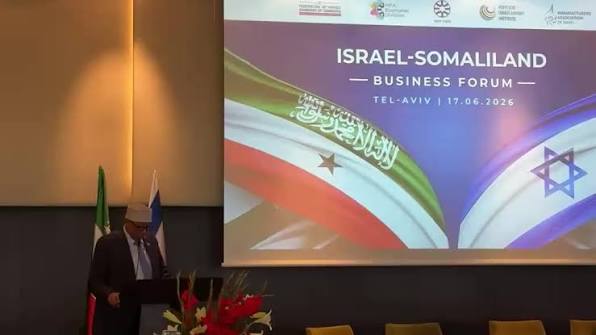
When President Abdirahman Mohamed Abdullahi told a room of more than 200 Israeli investors in Tel Aviv that “Somaliland is open for business,” he was making a pitch that would have been almost unimaginable two years earlier. The occasion was the first Somaliland–Israel Business Forum, held on 17 June 2026 — and it marked the moment when a diplomatic breakthrough began turning into a commercial agenda.
Six months earlier, in December 2025, Israel became the first country to formally recognise Somaliland’s independence. Recognition was the headline. The forum in Tel Aviv was something more practical: the first structured attempt to convert that diplomatic relationship into trade, investment and the transfer of technology. For a Somaliland business audience, this is the part that matters — and it is worth understanding clearly, beyond the politics that surround it.
What Actually Happened in Tel Aviv
The forum was held at the Dan Tel Aviv Hotel and built around a seminar titled “Business Opportunities in the Somaliland Market.” It was jointly organised by Israel’s Institute of Export and the Economic Affairs Department of Israel’s Ministry of Foreign Affairs, with the Association of Chambers of Commerce and the Manufacturers’ Association also involved — in other words, the core institutions through which Israeli companies typically explore new markets.
More than 200 Israeli business leaders, investors and company representatives attended. President Irro led a senior Somaliland delegation and used his address to set out the country’s pitch: a stable, self-governing market in a strategic location, open to foreign investment and ready for partnership. He identified the sectors where Somaliland is actively seeking engagement — agriculture and livestock development, water management, renewable energy, healthcare, cybersecurity, and infrastructure.
Those sectors were not chosen at random. They map closely onto areas where Israel holds genuine, globally recognised expertise — which is what makes the commercial logic of this relationship more than rhetorical.
The Forum was One Part of Something Larger
To understand the forum’s significance, it helps to see what surrounded it. This was not a standalone trade event; it sat inside the first-ever state visit by a Somaliland head of state, a multi-day programme that gave the commercial discussions unusually senior backing.
President Irro arrived in Israel on 14 June. Over the following days he was received by President Isaac Herzog, held talks with Prime Minister Benjamin Netanyahu, and was welcomed at the Knesset by its Speaker. On 15 June, he inaugurated Somaliland’s embassy in Jerusalem — the country’s first-ever embassy anywhere in the world, and notably located in the Har Hotzvim hi-tech park, Jerusalem’s technology cluster. For a nation positioning itself around innovation and investment, the choice of address was its own quiet statement of intent.
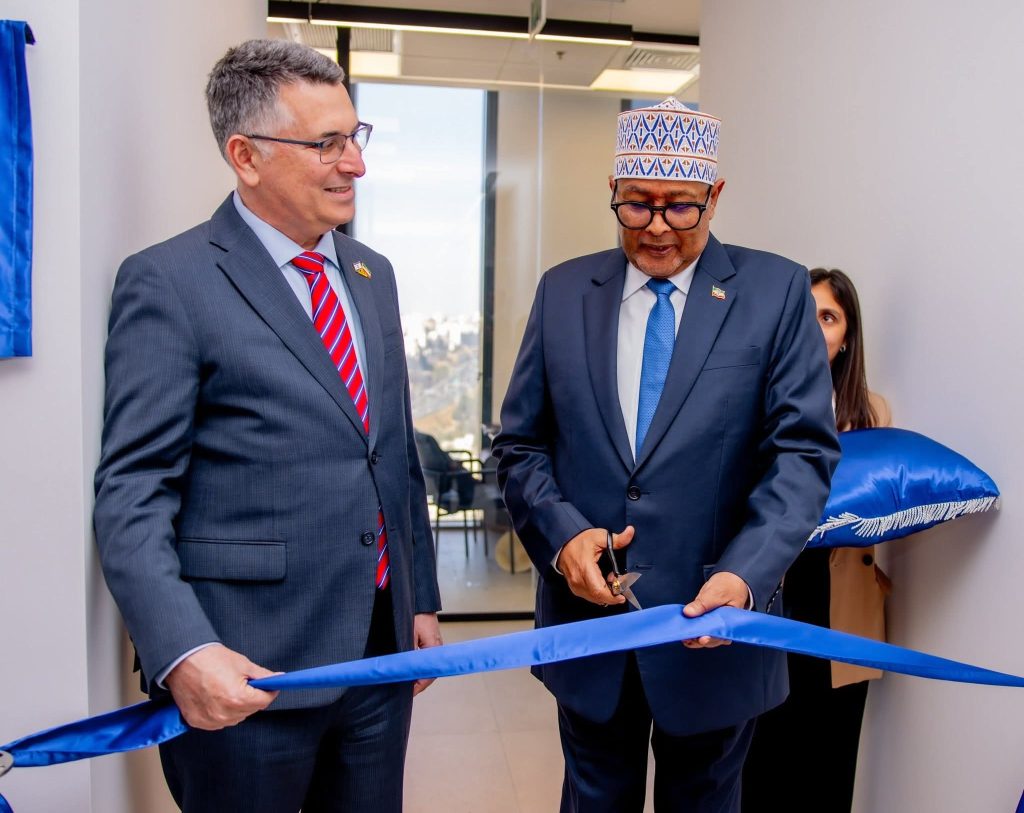
The commercial substance came through a series of ministerial meetings. President Irro met Nir Barkat, Israel’s Minister of Economy and Industry, for talks centred on investment opportunities, trade expansion, agribusiness and technology. He also met Finance Minister Bezalel Smotrich, who pledged that his ministry would work to remove barriers and promote collaboration to realise the trade and investment potential between the two economies. Smotrich noted that the meeting also included the Governor of Somaliland’s Central Bank — a signal that financial-sector cooperation, not just trade, is part of the conversation.
Underpinning all of this, the two governments signed a Declaration of Strategic Cooperation, establishing a formal framework spanning economy, security, technology, investment and community development. The forum, in effect, was the business-facing expression of that framework.
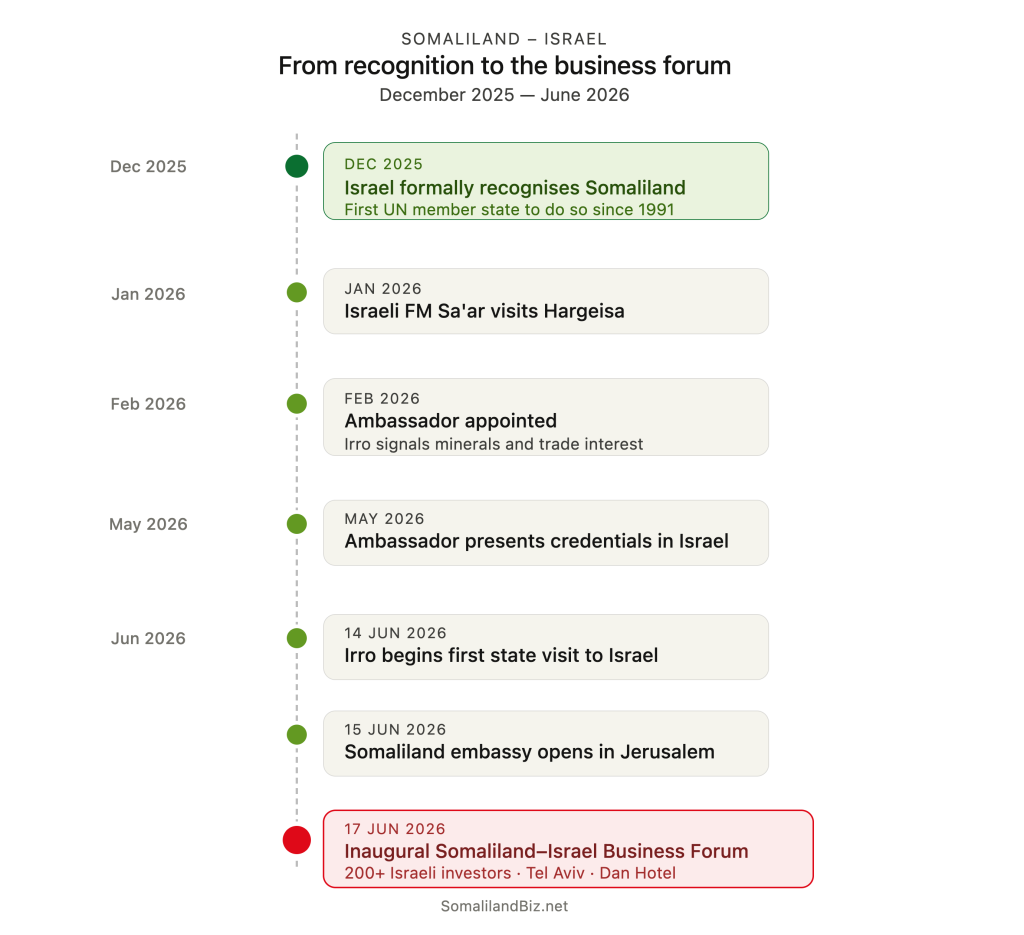
The relationship has moved quickly, and the pace itself is part of the story. In roughly six months it has progressed from recognition to a functioning embassy, a strategic-cooperation framework and a dedicated investment forum. That is fast by the standards of international diplomacy — and it explains why the business community on both sides is paying attention.
Why Israeli Companies are Interested
From the Israeli side, the appeal rests on a combination of strategic position and first-mover advantage.
Somaliland sits on the southern approach to the Bab el-Mandeb strait and the Gulf of Aden — one of the world’s most important shipping corridors, through which a significant share of global trade passes. For any company with an interest in logistics, maritime services or Red Sea trade, that geography is commercially meaningful in its own right.
Beyond location, there is the advantage of being early. Israeli officials have been candid that recognition gives Israeli entrepreneurs a head start in a market that few international competitors have yet entered. Somaliland’s sectors are, in many cases, underdeveloped — which means the opportunities are foundational rather than incremental. And the specific areas Somaliland has prioritised align almost precisely with Israel’s established strengths.
Where the Two Economies Fit Together
| Sector | Where Israel has world-class capability | What Somaliland needs |
| Water | Desalination, drip irrigation, water recycling, leak management | Drought resilience, irrigation for agriculture, urban water security |
| Agriculture & livestock | Agri-tech, animal health, yield optimisation, cold chain | Higher productivity, export certification, value-added processing |
| Renewable energy | Solar technology, off-grid systems, storage | Affordable power, rural electrification, reduced diesel dependence |
| Healthcare | Medical technology, telemedicine, hospital systems | Improved facilities, diagnostics, specialist capacity |
| Digital & cyber | Cybersecurity, fintech, digital infrastructure | Secure systems, digital government, financial-sector resilience |
| Infrastructure & logistics | Ports, smart logistics, construction technology | Trade capacity, transport links, modern facilities |
This is the core of the commercial case. In each row, there is a genuine match between an Israeli capability and a Somaliland need. Water technology is the clearest example: Israel is among the world’s leaders in making scarce water go further, and Somaliland faces recurring drought that affects both its people and its livestock economy. A Somaliland water-ministry delegation has already travelled to Israel for training in water management — an early, concrete instance of the kind of cooperation the forum is designed to scale.
What Somaliland is Putting on the Table
Somaliland’s pitch is not only about what it needs. It also has assets to offer.
The most discussed is mineral wealth. In a February 2026 interview, President Irro indicated Somaliland was willing to offer rights to mineral deposits as part of building the relationship, and the country has pointed to reserves it describes as including lithium — a critical input for batteries and electric vehicles. This is not new ground commercially: in 2024, a Saudi mining company secured an exploration deal in Somaliland for lithium and other critical minerals. For now, the minerals dimension is best understood as an enticement and a longer-term prospect rather than a concluded deal.
Alongside resources, Somaliland offers its maritime gateway — including the DP World–operated Berbera Port, the subject of the largest foreign investment in the country’s history — and access to a young, entrepreneurial population. President Irro also raised the prospect of direct Tel Aviv–Hargeisa flights beginning in the near future, which would materially ease the practical business of trade missions, investment visits and diaspora travel. No date has been confirmed.
The Honest Assessment
For all the momentum, a clear-eyed reading is essential — and it is exactly what distinguishes useful business intelligence from promotion.
No specific investment deals, signed company-level contracts or committed financial figures have been announced as a result of the forum. What took place in Tel Aviv was the creation of a channel: introductions, intent, and a framework. The conversion of that channel into actual investment is the work of the months and years ahead, and it is not guaranteed.
There is also a genuine risk environment around the relationship. Somaliland’s recognition by Israel has been rejected by Somalia, the African Union, the Arab League and several other states — and that opposition introduces a layer of political uncertainty that any prospective investor will weigh. The relationship also sits alongside a security dimension that has been widely reported. For the purposes of a business assessment, these belong in the column marked political risk: real, worth monitoring, but separate from the commercial opportunity itself.
Finally, execution risk is real on the ground. Turning memoranda into operating businesses requires bankable projects, a navigable regulatory environment and patient capital. Somaliland has made genuine progress in formalising its business environment — company registration, for instance, is now significantly faster than it was — but it remains an early-stage market, and investors will price that accordingly.
What to Watch Next
The forum’s true test will be measured in what follows it. The signals worth tracking are concrete: the first signed memoranda or company-level agreements; sector-specific trade missions, particularly in water, agriculture and energy; the launch of direct flights; the opening of Israel’s embassy in Hargeisa; and whether other states — the UAE and United States among them — move toward recognition, which would widen the pool of capital and confidence considerably.
Our View
The first Somaliland–Israel Business Forum should be understood for what it is: an opening move, not evidence of investment already arrived. Its importance lies in structure. Six months on from recognition, Somaliland now has a formal commercial channel to one of the world’s most advanced technology economies — and it used that channel to put its pitch directly in front of 200 investors who had never seriously considered the market before.
Whether that translates into water systems, power projects, agricultural ventures and digital infrastructure on Somaliland soil is the question that matters, and it will be answered by deals, not declarations. The conditions are unusually favourable: a clear fit between Israeli capability and Somaliland need, a government actively courting investment, and a first-mover window that will not stay open indefinitely.
SomalilandBiz will track this relationship as it develops — the agreements, the missions and the investments that determine whether the Tel Aviv forum becomes a turning point or a moment. For now, the door is open, and the conversation has started.
Sources & notes
Sources: Reuters; Horn Diplomat; Saxafi Media; Times of Israel; The Jerusalem Post; All Israel News; Somali Guardian; Kaab TV; Somaliland Presidency and Ministry of Foreign Affairs statements. Confirmed facts are distinguished from reported claims throughout; no specific investment agreements had been publicly confirmed at the time of publication.
This article focuses on the commercial and economic dimensions of the Somaliland–Israel relationship. References to security and diplomatic matters are included only as context relevant to investment risk.