
A London investment pitch, a new hotel in Berbera and fresh finance for young entrepreneurs gave October plenty of momentum. New ticketing rules and questions about public money were reminders of the conditions businesses still work within.
Welcome to the SomalilandBiz monthly roundup. Each month we will set out the business developments that mattered, explain why they matter and say what we will be watching next. Some will be openings and deals; others will be setbacks or rules that change how companies operate. Where an announcement makes a promise, we will come back to see whether it was kept.
October had a bit of everything. A hotel opened its doors, a loan fund reopened, investors in London were shown a pipeline of projects and regulators prepared changes that will reach vehicle owners and travel agents. The question running through all of it was how much will turn into operating businesses, accessible finance and predictable rules.
London hears a US$1.2 billion pitch
Somaliland took its investment case to London on 14 October, holding its first investment summit in the city alongside the AFSIC – Investing in Africa conference. Fourteen opportunities with a combined stated value of more than US$1.2 billion were presented, covering ports, energy, minerals and infrastructure, with support from the Somaliland UK Mission. Horn Diplomat reported that Lord Stuart Polak used the summit to urge investors to look closely at Berbera and the wider economy.
The headline figure is the value of projects on offer, not money raised. Nothing announced in October suggested that any of the fourteen had reached financial close. Even so, putting defined projects in front of investors is more useful than a general invitation to invest, because it gives them ownership, costs, customers and approvals to assess. It also builds on the Somaliland Investment Summit held in Hargeisa in 2025.
What to watch: which projects attract serious due diligence, who puts up capital and what changes on the ground as a result.
Berbera stays at the centre of the trade story
In a 12 October interview with Sky News Arabia, reported by Horn Diplomat via AllAfrica, Foreign Minister Abdirahman Dahir Adan Bakal said Somaliland was ready to discuss Ethiopia’s needs for access to the sea, including through Berbera. He noted that the port is using only 30–40% of its capacity. He did not announce a new agreement, terms or a timetable.
For businesses, the spare capacity is the point. More cargo through the corridor would mean work for hauliers, warehouses, clearing agents and suppliers, but only if the commercial and customs arrangements make the route competitive. Our DP World Berbera Watch List and our report on the direct Jebel Ali–Berbera shipping service set out how the port has developed so far.
Livestock was also on the agenda. At the start of the month, the Minister of Livestock and Rural Development asked cabinet to back a national plan and a dedicated livestock export terminal at Berbera, as we covered at the time. No budget or construction timeline has yet been published.
What to watch: funding and a timetable for the livestock terminal, and any concrete cargo commitments on the Ethiopian corridor.
Compulsory vehicle insurance moves closer
The Somaliland Insurance Summit and Expo brought the sector together in Hargeisa on 12–13 October. By the end of the month, the focus had shifted to preparing for compulsory vehicle insurance, which is due to start on 1 January 2027. Preparations reported in late October covered regulation, enforcement, staff training, regional access and a process for handling policyholder complaints. These were priorities still being worked through, not a finished system.
For any business running vehicles, the change brings both protection against losses and a new cost to budget for. The quality of cover will matter as much as the obligation to buy it. Operators need clear policies, understandable exclusions and confidence that valid claims will be paid, and that service has to reach beyond Hargeisa.
What to watch: published premiums and policy terms, and whether insurers are ready in the regions before enforcement begins.
A second round of youth finance
The Somaliland Youth Development Fund launched the second round of its interest-free loan programme on 8 October, with MicroDahab, part of the Dahabshiil Group, managing the lending. The package is described as worth US$500,000, available to young entrepreneurs across six regions and repayable monthly over two years. US$300,000 of it comes from repayments made by the first round’s borrowers.
That revolving model is the encouraging part: money repaid by one cohort is lent to the next. These are loans rather than grants, though, and the headline figure is not money already paid out. The real measures are how many businesses receive funding, how many repay and how many grow. And to be honest, this is a very small sum for a country of 6million people with a high youth population.
What to watch: the number of loans disbursed and the repayment rate from round one.
Tax collection and accountability
The Ministry of Finance and Economic Development opened a Tax and Taxpayer Forum in Hargeisa on 12 October, led by State Minister Ismail Mawliid Abdillahi, to improve communication with businesses and give them a regular channel to raise problems. No changes to tax rates or rules were announced.
Later in the month, the Auditor General said 27 people had been arrested in corruption investigations since President Abdirahman Mohamed Abdullahi Irro took office, according to Hiiraan Online. That is a cumulative figure, not October’s total. The report did not name those arrested or say whether charges had been filed, and an arrest is not proof of guilt.
For taxpayers, collection and accountability belong together. Businesses need to know what they owe, to be treated consistently and to see public revenue used credibly.
What to watch: whether the forum becomes a regular fixture, and whether the investigations lead to charges.
New ticketing rules hit travel agents
On 25 October, the Ministry of Civil Aviation and Airports Development stopped accepting tickets issued through Somalia’s Billing and Settlement Plan (BSP) for departures from Hargeisa and Berbera. The rule applies to tickets already issued, including the return legs of existing bookings. Agents flagged as non-compliant had until 31 October to regularise their licences, and from 1 November airlines may work only with agents that meet Somaliland’s requirements. Airlines were told to review existing bookings and notify affected passengers.
A six-day transition is short. Agents and their customers face practical questions about reissuing tickets and who pays any extra cost, and the impact reaches business travel as well as personal trips. We have seen no figures on how many passengers were affected.
What to watch: whether airlines, agents and the regulator can apply the rules without leaving travellers to resolve conflicting instructions.
Ambassador Hotel opens in Berbera
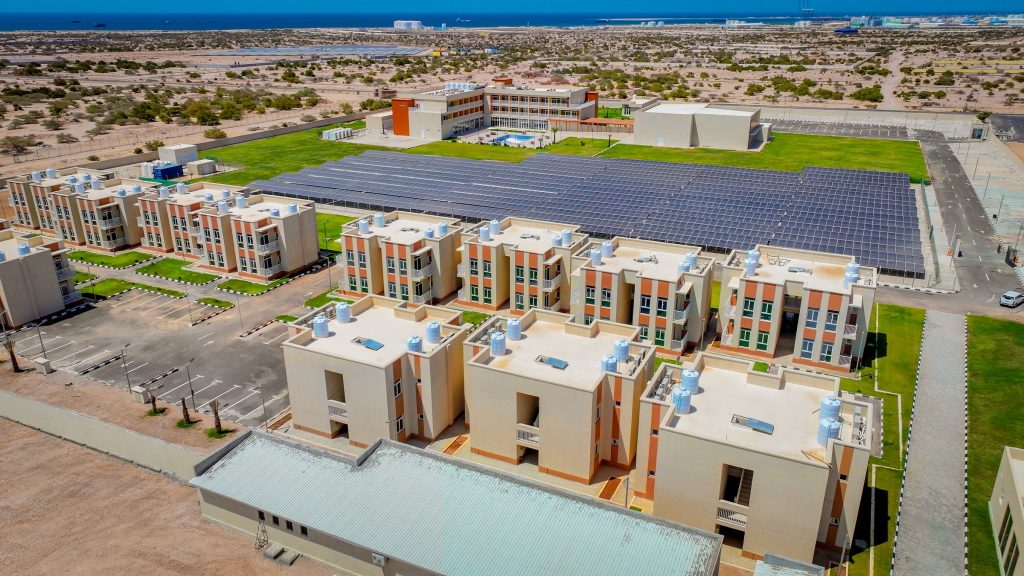
Ambassador Hotel Berbera held its soft opening on 10 October, adding 58 rooms and 56 one-bedroom villas to the city’s accommodation. As we explored in our Ambassador Hotel Berbera feature, the villas, with their own kitchens and living space, are aimed at organisations, contractors and other long-stay guests, while the ballroom and pool widen the audience to events and weekend visitors.
This is a finished investment rather than a promise. Whether it succeeds will depend on year-round occupancy across business travellers, events, diaspora families and domestic leisure guests.
What to watch: occupancy through the quieter months and the take-up of long-stay villas.
Also on the business calendar
Hargeisa Networking Night. The third edition took place on 29–30 October at the Serene Sarovar Premiere Hargeisa, with investment as its theme. No investment or deal totals were announced. The venue choice is another sign of how far the Serene Sarovar has become part of Hargeisa’s business calendar.
Instant payments. The central bank reported progress on the Somaliland Inclusive Instant Payment System, which is designed to connect banks and mobile money providers. This is development work, not a live service. For merchants, the eventual benefit would be simple payments between Zaad, eDahab and bank accounts.
Our View
October showed Somaliland’s economy at several stages at once: a business opening, a loan fund reopening, large projects being pitched and new rules being prepared. We think it is worth keeping those stages apart.
Counting proposed investment as money secured overstates progress. Treating a regulatory announcement as a finished reform overlooks the work needed to make it function. Overlooking a new hotel because it is smaller than a port proposal misses a real change in the market. As we argued in Beyond the Headlines, opportunity and difficulty have to be read together.
So that is how this series will work. In the months ahead we will follow the evidence: financing agreements signed, loans disbursed, claims paid, passengers served and businesses adapting to new rules. Those results will tell us more about Somaliland’s commercial progress than the number of announcements ever could.
The November roundup will follow in early December. If you have a business development you think we should cover, contact the SomalilandBiz editorial team.